
Bengal’s Cultural Legacy Focus At The SundeRhythm Festival 2025
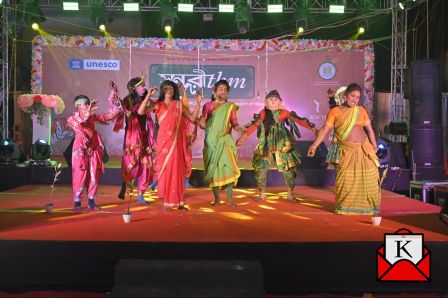
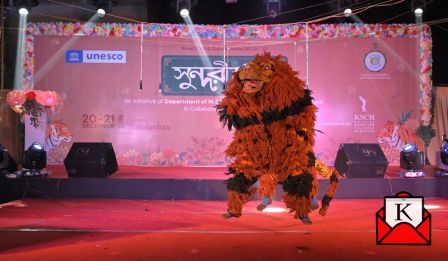
UNESCO and the Department of Micro, Small & Medium Enterprises & Textiles (MSME&T), Government of West Bengal, organized the SundeRhythm Festival 2025 at Sajnekhali in the Sundarbans. The Kolkata Society for Cultural Heritage (KSCH), a UNESCO implementation partner for the Rural Craft and Cultural Hubs (RCCH) project, staged the festival.
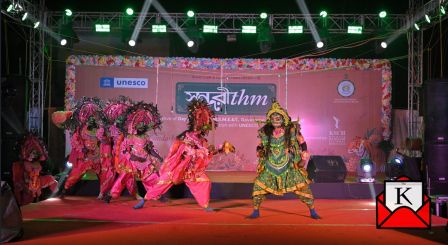
In order to honor West Bengal’s continuing cultural legacy, the SundeRhythmFestival 2025 gathered together craftspeople, cultural practitioners, educators, and community leaders. In addition to showcasing enduring folk traditions, including Chhau, Jhumur, Baul, and Fakiri, Bhatiyali, Raibenshe, Gambhira, and Bhawaiya, more than 100 artisans and performing artists from all over the state took part, promoting discussion on cultural rights, identity, and intergenerational responsibility.
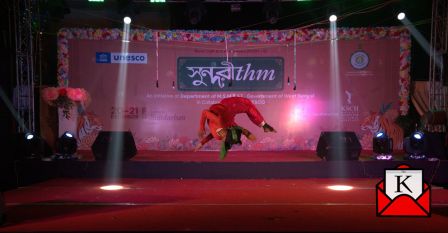
The festival, which took place in the Sundarbans Biosphere Reserve, highlighted the intimate connection between environment, culture, and community resilience in one of the most ecologically vulnerable areas on earth. The Sundarbans, one of the world’s largest and most ecologically diverse mangrove ecosystems, was added to the UNESCO World Heritage List in 1997. However, it is becoming more and more susceptible to cyclones, siltation, saline water intrusion, and human pressures. Cultural practices and traditional knowledge have developed in tight relationships with nature in this delicate setting, demonstrating that safeguarding is a continuous process maintained by people who continue to practice, adapt, and transfer their history rather than a static act of preservation.
Traditional textiles and crafts from all around the state were on display in a carefully planned handicraft and handloom exhibition, which improved rural artists’ access to markets and reinforced culture’s role as a catalyst for inclusive local development. Banabibi Pala, a traditional musical play with deep roots in the Sundarbans and a focus on coexistence between humans, nature, and belief systems, was one of the program’s highlights. By supporting traditional artists, craftspeople, and community practitioners, establishing sustainable venues where heritage and livelihoods converge, and promoting the generational transfer of knowledge and skills, the festival aims to build rural cultural ecosystems. Culture endures because it is deliberately preserved, practiced, and taught rather than because it is inherited, as the festival reflects.
Tens of thousands of craftspeople and cultural practitioners in West Bengal rely on traditional knowledge systems for their livelihoods, but many of them struggle with dwindling earnings, restricted access to markets, and inadequate institutional support. In response, the RCCH program presents culture as a valuable economic resource that may support microenterprises, create good jobs, and boost local economies while protecting intangible cultural heritage. The initiative, which is carried out using UNESCO’s Art for Life strategy, recognizes artists and craftspeople as stewards of cultural heritage and contributors to sustainable development while putting communities at the center of decision-making.
In accordance with the 2003 UNESCO Convention for the Safeguarding of the Intangible Cultural Heritage, UNESCO and its partners reaffirmed their commitment to protecting intangible cultural heritage through the SundeRhythm Festival. They also supported the implementation of the 2005 Convention on the Diversity of Cultural Expressions, especially its focus on integrating culture within frameworks for sustainable development.
Priyanka Dutta