
A Special Event On The 205th Birth Anniversary Of Vidyasagar
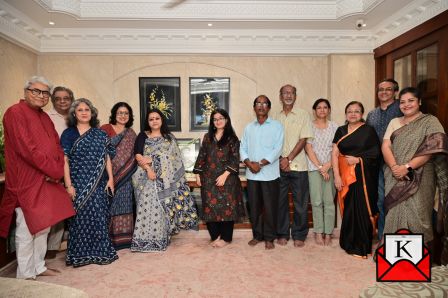
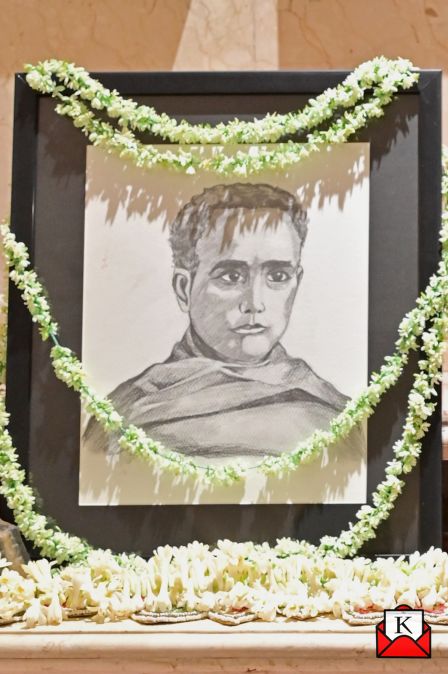
‘Dayar Sagar’, an evening of talks, discussions, and the reading of articles and poems, was organised under the auspices of Dr. Pratip Banerji Memorial Clinic & Services, and hosted by its founder, Sm. Rinku Banerji, as a 205th birth anniversary tribute to Pandit Iswarchandra Vidyasagar and his extraordinary life and work in the spheres of education, social reform, and philanthropy.
His pioneering role in the practice and popularization of homeopathy as an inexpensive medical treatment was a significant part of Pandit Iswarchandra Vidyasagar’s philanthropy. He frequently provided free homeopathic treatment to the impoverished in Karmatar, now in Jharkhand, where he spent the last 18 years of his life, as well as in their ancestral village of Birsingha with the assistance of his younger brother Ishanchandra.
Ishanchandra’s son, Dr. Pareshnath Banerji, who lived in Mihijam, Jharkhand, became a household name. Three of his sons were part of the third generation of homeopaths in the family, while Dr. Pratip Banerji, whose name this clinic is based on, was part of the fourth generation. He and his father, Dr. Prasanta Banerji, became well-known homeopaths around the world, co-authoring the book The Banerji Protocols: A New Method of Treatment with Homeopathic Medicines, and playing a significant role in the family’s over 150-year history of homeopathy.
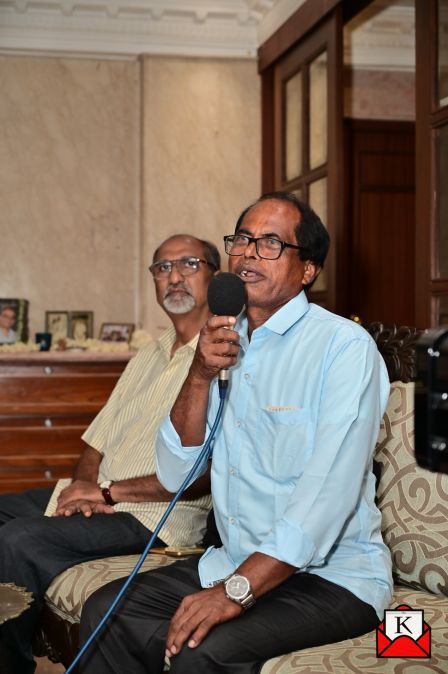
The discussions with two knowledgeable speakers at “Dayar Sagar” took on significant weight: First, Santipur native Shri Susanta Mutt, who has served as the Sampadak of the 110-year-old Santipur Sahitya Parishad for the past 24 years, is actively involved with several social welfare initiatives and organizations in Santipur, conducts research and writes on a range of social and educational topics, and discussed the contents of “Bratyakatha”, a special publication on Pandit Iswarchandra Vidyasagar that he edited and released in 2020 to commemorate the 200th anniversary of Vidyasagar’s birth.
Then, based on his extensive knowledge of Vidyasagar and his family spanning more than 200 years, Shri Dilip Banerjee, who is related to Vidyasagar’s paternal uncle Kalidas Bandyopadhyay’s family and splits his time between the family’s ancestral village Birsingha and Karmatar, where Vidyasagar spent his final 18 years, spoke. It was intriguing that both Shri Mutt and Shri Banerjee noted that in the cases of Vidyasagar (1820–1891) and Rammohun Roy (1774–1833), before him, their absolute command of Hindu shastras strengthened them sufficiently to defeat all their opponents and succeed in their endeavors.
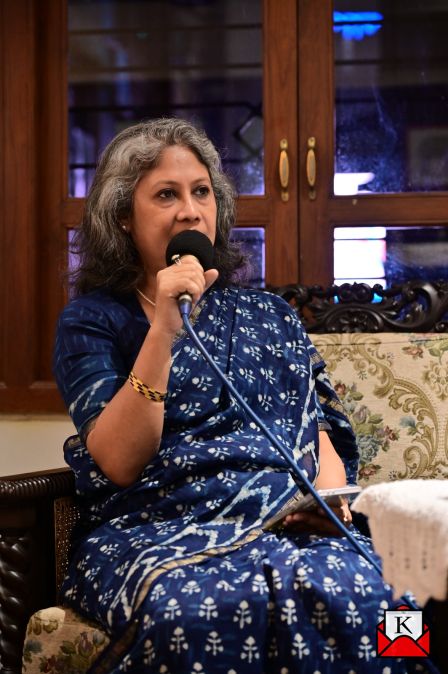
The crowd responded quite well to these two presentations. A few passages from Rabindranath Tagore’s well-known tribute, “Vidyasagar-charit,” were read by veteran advertising professional Mrityunjoy Chatterjee. Poet Gopa Bhattacharya read her poems and expressed regret that the traditional “Barna Parichay” from Vidyasagar is no longer included in modern curricula. Mahasweta Ray, a translator and website developer, read an article she had written about Vidyasagar. Many audience members brought up the fact that Vidyasagar assisted hundreds of impoverished people, many of whom he was unaware of, including tribal people in and around Karmatar, in addition to well-known individuals like Michael Madhusudan Dutt and Keshab Chandra Sen.
Along with Vidyasagar’s numerous other accomplishments in the fields of education, social reform, and philanthropy, the significance of Vidyasagar’s role—as well as that of Maharshi Debendranath Tagore, Rajnarain Bose, and Akshoy Kumar Dutt—in the Tattvabodhini Sabha’s operations and the publication of its Tattavabodhini Patrika was also covered.
Priyanka Dutta