
ZSI Scientists Discover New Wolf Spider Species In Sunderbans
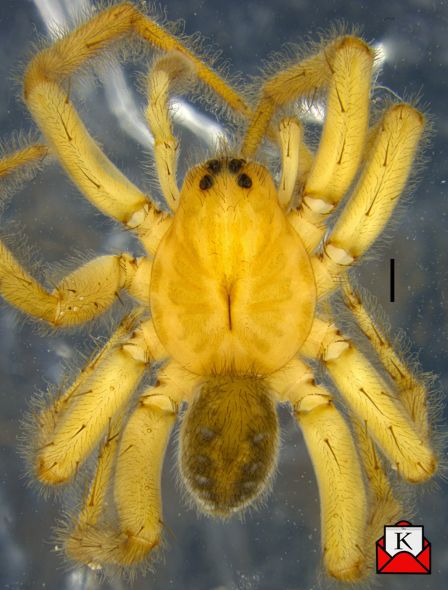

The discovery of a new spider species on Sagar Island in the Sundarbans by researchers from the Zoological Survey of India (ZSI), Kolkata, highlights the region’s noteworthy but little-known biodiversity. The genus Piratula, a group of wolf spiders primarily found in Asia with a restricted distribution in Europe and North America, has been found for the first time in India.
The family Lycosidae, which includes the recently discovered species Piratula acuminata, is also referred to as wolf spiders. These nimble predators live on the ground and ambush their victims, in contrast to web-building spiders. The species is a medium-sized spider, about 8 to 10 millimeters long, with a soft creamy white coloring with brown, chalk-white dots on its abdomen and two light brown stripes toward the back, according to Dr. Souvik Sen, lead researcher from ZSI. Its identification as a novel species was largely dependent on the unique structural details of its genitalia, particularly the ovate spermathecae in females and the acuminate basal arm of the tegular apophysis in males.
This spider’s distinctive morphology made it clear right away that it was an unidentified species.
In the most recent issue of the peer-reviewed scientific journal Zootaxa, the research team—which included Dr. Souvik Sen and Dr. Sudhin P. P. from ZSI, Kolkata, and Pradeep M. Sankaran from Sacred Heart College, Cochin—published their thorough scientific report.
The ecological diversity of this UNESCO World Heritage Site is further supported by this discovery on Sagar Island, the largest island in the Sundarbans deltaic complex. Important mudflats and estuarine waterways that sustain a wide variety of plants and animals are among the island’s distinctive ecosystems, which were formed by alluvial deposits from the Ganga River.
In order to fully comprehend Piratula acuminata’s ecological importance and its possible susceptibility to the growing risks caused by climate change within the Sundarbans ecosystem, the researchers stress the urgent need for additional research. This finding emphasizes the continued significance of biodiversity research and committed conservation efforts in this crucial global hotspot.
Priyanka Dutta