
How Ecotourism Led To Bengal’s Great Foreign Tourist Crowd?
India’s tourism industry is a myriad of colors, culture, monuments, food, and landscape, with each state bringing something unique for every visitor. In 2024, this industry experienced something unique: West Bengal emerged as the second-most-visited Indian state by foreign tourists. The state pulled a massive 3.12 million foreign crowd, taking over tourist hotspots like Rajasthan and Uttar Pradesh.
But why? The data proves that Bengal has adapted to travel trends, with ecotourism at the centre of it. More than just monuments, the state has a lot to offer. Let’s take a look at how Bengal continues to grow in the tourism industry.
The Big Picture: India’s Tourist Spots
Before getting into Bengal’s success story, let’s understand how the states compare when it comes to foreign tourist arrivals (FTAs).
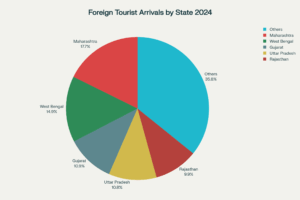
| Rank | State | Foreign Tourist Visits | Percentage Share |
| 1 | Maharashtra | 3.71 million | 17.69% |
| 2 | West Bengal | 3.12 million | 14.92% |
| 3 | Uttar Pradesh | 2.27 million | 10.83% |
| 4 | Gujarat | 2.27 million | 10.86% |
| 5 | Rajasthan | 2.07 million | 9.90% |
| 6 | Delhi | 2 million | 9.55% |
| 7 | Tamil Nadu | 1.16 million | 5.55% |
| 8 | Kerala | 0.74 million | 3.53% |
| 9 | Bihar | 0.73 million | 3.52% |
| 10 | Punjab | 0.54 million | 2.59% |
Foreign Tourist Visits in Numbers
Foreign Tourist Visits Percentage Share
These numbers show how global travel is changing. Travelers are choosing destinations beyond just historical sites, and sustainability is now more important than ever. Bengal aligns well with the idea of ecotourism, with its natural beauty and rich cultural heritage experiences.
What is Ecotourism?
Ecotourism means traveling responsibly to natural areas, supporting conservation, and helping local communities. It focuses on reducing environmental damage and offering travelers rewarding experiences in nature. In recent years, ecotourism has played an important role in the economic growth of areas with diverse wildlife.
The Bengal Ecotourism Advantage
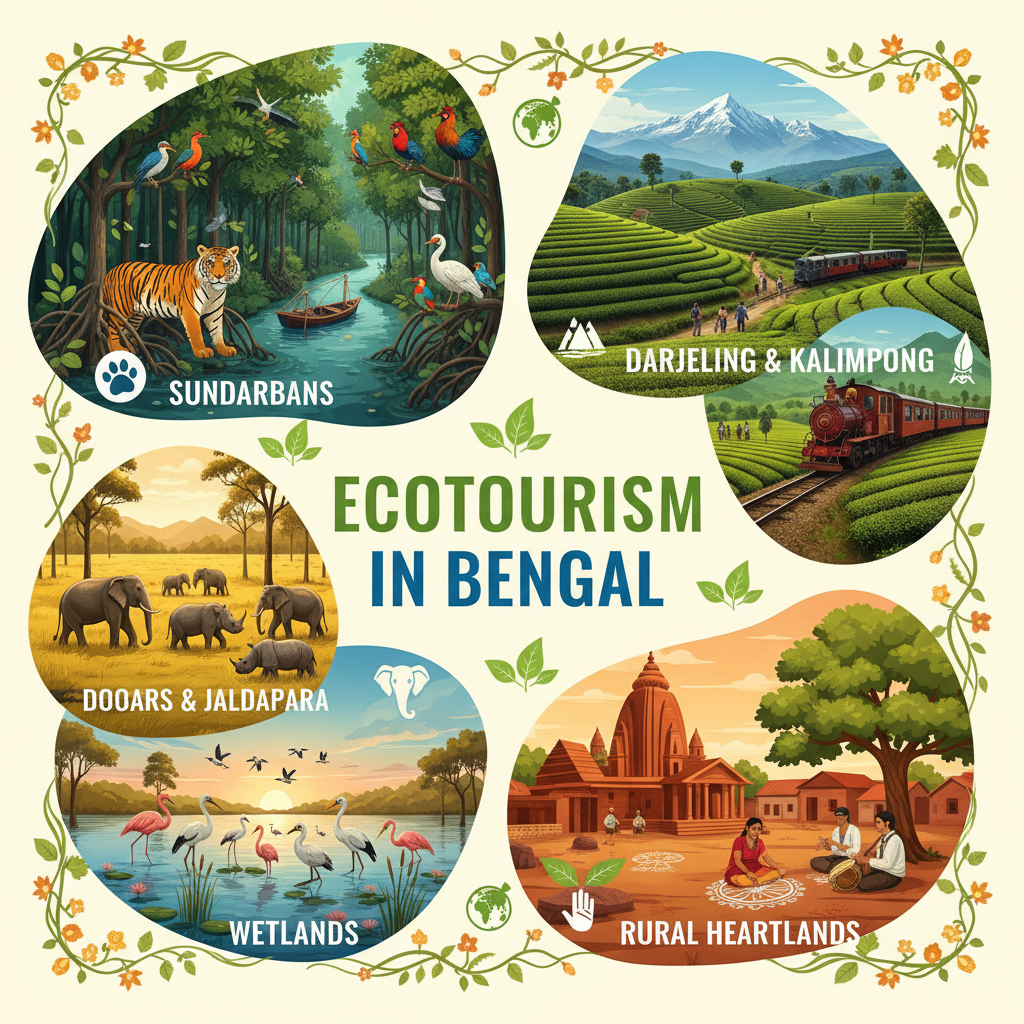
Fresh air, cool breeze, chirping of birds, and greenery all around you. Sounds beautiful, right? Well, West Bengal has it all for you. From the snowcapped views of the Himalayas in Darjeeling to the mysterious mangroves and wildlife of the Sundarbans, the world’s largest mangrove forest, and a UNESCO World Heritage Site. These experiences have turned Bengal into a go-to destination for ecotourism, drawing birdwatchers, trekkers, and wildlife photographers from all over the world.
What are some popular ecotourism spots in Bengal?
1. The Sundarbansis home to the Royal Bengal Tiger, rare Irrawaddy dolphins, and over 250 bird species. This ecosystem is a major attraction for nature lovers.
2. Want to explore with Himalayan treks? Darjeeling and Kalimpongoffer trails through lush forests, tea estates, and local villages, providing a glimpse into both natural beauty and local life.
3. Dooars and Jaldaparaare lush forested areas with easy sightings of wild animals. The forested reserves and grasslands of Dooars are popular for elephant and rhino safaris.
4. Wetlands like the Rasikbil, Santragachi, and the East Kolkata Wetlands are havens for birdwatchers, especially during winter migration.
5. West Bengal is one of the most unique states where cultural and ecotourism meet. Bengal’s rural heartlands like Shantiniketan, Bishnupur, and the terracotta villages of Bankura are redefining cultural tourism. Foreign tourists can engage in local art workshops, farm stays, and eco-village tours.
How does Ecotourism in Bengal Impact Local Communities?
Bengal has a rich culture, and this huge inflow of foreign tourists directly creates opportunities for the locals. Handicrafts, local cuisine, and folk performances introduce foreign tourists to Bengal’s grassroots artistry. Eco-resorts, homestays, and locally-guided tours generate income for tribal and rural populations. Tourists interact with such artists and may buy handmade keepsakes and gifts, which help boost the livelihood of artisans. Most locals work in resorts and set up shops, or perform traditional dances and folk music with instruments like Baul, Ektara, Dotara, and Khamak.
Bengal’s Climb in India’s Tourism Rankings Through Statistics
The following insights from the recent tourism statistics paint a clear narrative:
- In 2024, Bengal attracted 3.12 million foreign tourists, up from 2.7 million in 2023, marking a 15% year-on-year growth.
- Bengal overtook Uttar Pradesh and Gujarat, both recording 2.27 million foreign visitors.
- West Bengal’s share in India’s total foreign tourist visits stands at 14.92%, second only to Maharashtra’s 17.69%.
As per insights by the team at GrabOn, which closely tracks travel trends, West Bengal’s steady rise in foreign tourist arrivals reflects a growing preference for authentic, sustainable travel experiences. The growth is the outcome of consistent policy support, community participation, and infrastructure improvement.
What Gives Bengal an Edge Over Other States in Ecotourism?
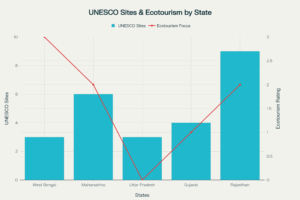
Bengal boasts the best of both worlds. It has both natural wonders and cultural heritage, positioning the state as a prime destination for eco-conscious tourists.
Bengal’s Government Initiatives to Promote Tourism
The West Bengal Incentive Scheme’s State Capital Investment Subsidy (SCIS) provides new tourism projects in West Bengal with a subsidy of up to 45%. The scheme was launched on February 22, 2021, and aims to boost employment and revenue in the state through tourism. The stratagem aims for development in ecotourism spots like Purulia and better distribution of local products, such as Malda Mangoes.
The “Experience Bengal: The Sweetest Part of India” campaign was launched in 2015 by the West Bengal Tourism Department. The campaign continues to promote the state for its “sweet” language, food, and hospitality.
The government is also taking efforts to promote the Sundarbans, the state’s colonial heritage sites, and cultural events such as the UNESCO-recognized Durga Puja.
Bengal’s Ecotourism-Rich Tomorrow
The foreign tourism growth of Bengal is not merely a statistic but a factual story of how a state can blend culture, nature, and sustainability to redefine its place on the world tourism map. Ecotourism will continue to rise in the future as people become more aware of the importance of sustainability and preservation of ecological balance.
Millennials and Gen Z travelers value meaningful and responsible travel. They want to connect with nature, understand local cultures, and make sure the visit will contribute positively to the environment. Accordingly, the government of Bengal is promoting eco-resorts, protected areas, and local community tourism to make ecotourism more accessible for domestic and international tourists.