
Focus On The Art Of Mask Making In The Masklore Of India

The expansive documentary The Masklore of India delves deeply into the core of India’s enduring customs, revealing the long-forgotten, vanishing, and incredibly tenacious realm of traditional mask-making and performance. It is more than just a movie; it is a cultural journey that has endured for centuries despite the forces of modernity. It explores identity, faith, mythology, and artistic expression.
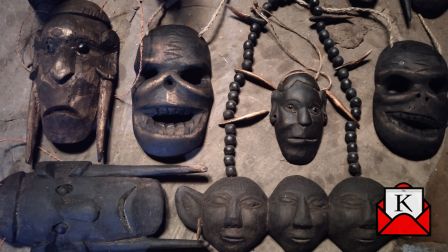
Indian traditional masks are not inanimate objects intended to be preserved under museum glass or exhibited as ornamental curiosities. They are living representations of belief and memory. They talk via artists, breathe during festivals, and change common people into gods, spirits, demons, and epic heroes. They are revered legacies—echoes of predecessors who used sculpted faces made of clay, wood, bamboo, paper, fabric, and metal to convey affection, terror, celebration, and storytelling.
The movie explores a significant truth: sometimes wearing a mask is necessary before revealing the most profound human emotions and spiritual realities. The mask represents revelation rather than concealment in India’s ritualistic and dramatic traditions. It enables the performer to transcend their mortal self, the divine to descend, and the fantastical to become visible.
Indranil Sarkar, an internationally renowned director, leads audiences through a remarkable emotional and visual journey. He traverses villages, forests, temples, and mountain monasteries using poetic narration and immersive cinematography, capturing not only artistic creations but also the spirits of the people who uphold these customs.
The Masklore of India, produced by Jaspreet Kaur and distributed by KR Movies & Entertainment Pvt. Ltd., honors the performers, craftspeople, and guardians of cultural heritage whose work frequently goes unnoticed outside of their local communities.
The film starts in the red soils of Odisha and Bengal, where colorful masks used in traditional ritual dances come to life during festivals.
It floats over the river island of Assam, where dramatic storytelling and devotion are combined in performance traditions. It climbs into the highlands of Nagaland, Arunachal Pradesh, Sikkim, and Uttarakhand, where masks are used in native celebrations and monastery rites to summon ancestral forces and protect spirits. It continues southward into Kerala’s temple traditions, where elaborate and emotive masks convert actors into divine incarnations during religious rites.
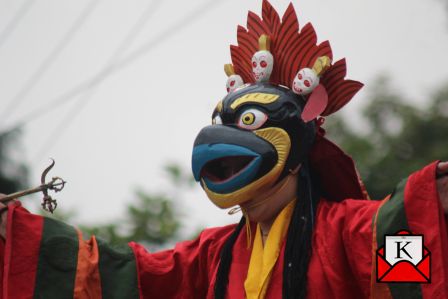
These masks hang peacefully in houses, workshops, and temple storerooms for the majority of the year. But they awaken with the arrival of festivities. They transform into legendary figures from antiquated literature, such as heroes who defend dharma, devils that shout in opposition, and gods who descend to bless. Myth and reality blend in these moments. The town plaza is transformed into a celestial stage. Communities that celebrate not just performance but belief watch as drums thunder, incense rises, and tales older than recorded history are revealed.
The documentary illustrates the meticulous workmanship that goes into each mask—the molding of raw materials, the layering of colors, the symbolism in every flare of a nose or curve of an eyebrow—through close interviews with performers and artisans. Every mask tells a story about generational knowledge passed down through families, loyalty, and regional identity.
However, Indian masklore is about preservation as much as celebration. Due to migration, commercialization, and the weakening of rural patronage systems, many of these customs are currently in danger of becoming extinct. What happens when the masks go silent is a subtle but pressing topic that the movie poses.
The Masklore of India is a movie tribute to India’s intangible cultural legacy that is both visually stunning and emotionally stirring. It serves as a reminder that culture is dynamic and is sustained by participation and communal memory. It demonstrates that masks are more than just works of art; they are faces taken from eternity that serve as conduits for communication between humans and the divine.
The Masklore of India serves as both documentation and devotion in a world that is quickly forgetting its origins. It serves as a reminder that ancient stories still exist among us when the drums start, and the masks are put on.
Priyanka Dutta