
A Call For Climate Reporting With Focus On Health
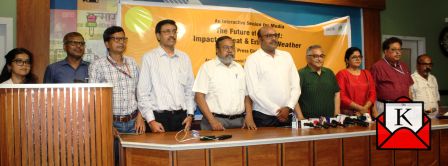
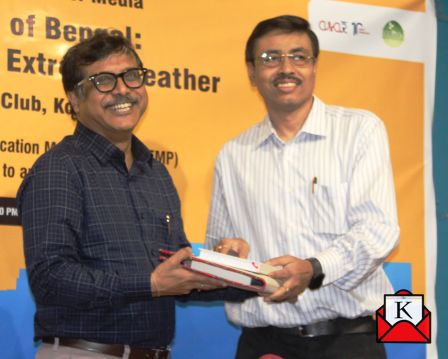
An interactive session at the Press Club in Kolkata brought together weather scientists, medical and environmental experts, and senior journalists to discuss ways to simplify and strengthen climate coverage in the media for greater public awareness as West Bengal struggles with unprecedented summer temperatures and extreme weather events. The panel asked reporters to pay attention to the growing risks to public health as well as the voices of marginalized frontline communities that are suffering the most from this climate catastrophe.
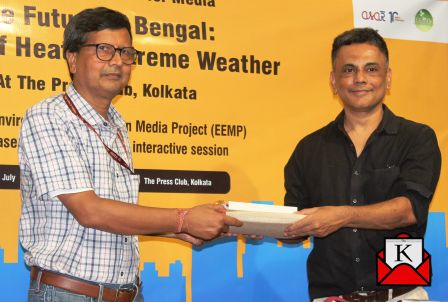
The goal of the session, The Future of Bengal: Impact of Heat & Extreme Weather, was to show how the state’s public health, economy, and social fabric were being altered by extreme heatwaves and weather events. Asar Social Impact Advisors Pvt Ltd, the Environmental Education Media Project (EEMP), and the Press Club of Kolkata collaborated to organize it.
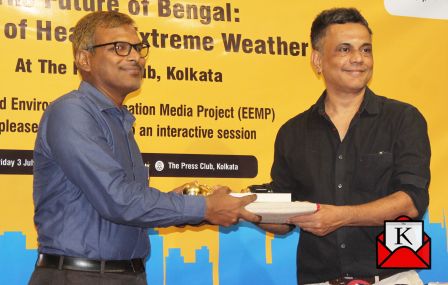
Dr. H.R. Biswas, Scientist-F at the India Meteorological Department’s (IMD) Regional Centre in Kolkata, explained how the IMD operates and deciphered the changing patterns of regional heatwaves. Dr. Biswas encouraged the media to use these tools to give communities more time to prepare for extreme events by guiding them through the intricacies of IMD’s early warning systems and explaining key meteorological terms.
Dr. R. K. Jenamani, Head, Regional Meteorological Centre, Kolkata, also graced the event.
During the presentation by Dr. Pratim Sengupta, a renowned nephrologist in Kolkata and a Clinical Research Fellow from Boston, USA, the discussion turned to the effects of heat on people. Dr. Sengupta delivered a stark warning about the invisible toll that prolonged heat and high humidity take on the human body, particularly regarding kidney health and dehydration. He called for immediate medical preparedness and policy-level interventions to protect vulnerable populations, emphasizing that frontline workers, outdoor laborers, and marginalized communities are completely unprotected from these physiological stresses.
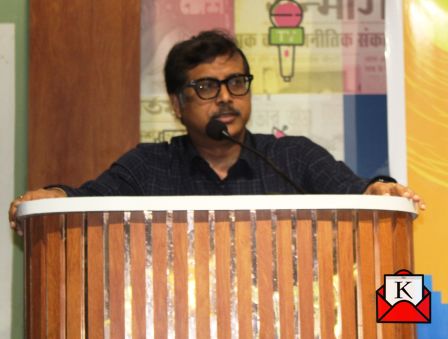
The difficulties of contemporary climate journalism were discussed in a panel discussion titled Beyond the Data: People, Narrative & Bengal’s Climate Reality. Prof. Abhijeet Chatterjee of the Bose Institute, Swati Bhattacharjee, a journalist and researcher, Jayanta Basu, a climate journalist, and Snehashis Sur, President of the Press Club Kolkata, and other experts were on the panel, which was moderated by senior journalist Ritwik Mukherjee.
The Bose Institute’s Prof. Abhijeet Chatterjee emphasized that journalists and researchers must collaborate to ensure that the public can understand the complex scientific data stories without losing sight of the crisis’s facts. Climate stories, whether about heat, air quality, or other crises, will need to be treated as a central issue that impacts our daily lives, politics, and economy.
The workshop concluded with a collaborative roadmap for future climate coverage, highlighting three critical strategies. First, journalists must proactively integrate IMD early warnings into daily reporting before heatwaves reach their peak. Second, coverage should frame extreme heat as an active public health crisis that directly threatens well-being and strains local medical infrastructure. Finally, the panel emphasized that effective climate journalism requires actively centering the voices of marginalized frontline communities, particularly women.
Priyanka Dutta