
An Exciting Session “Aparna Sen Unplugged” At AKLF 2026
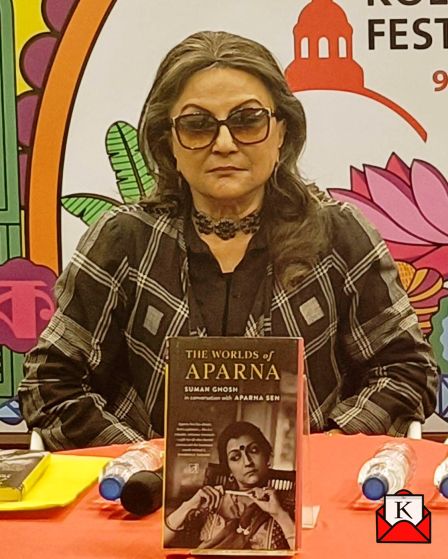
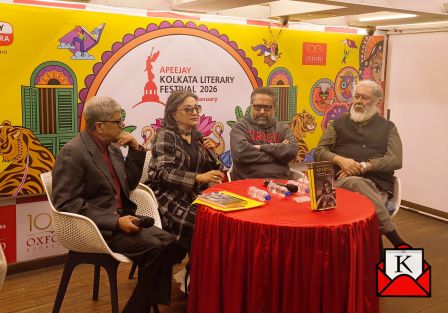
During the “Aparna Sen Unplugged” discussion at the Oxford Bookstore, as part of the Apeejay Kolkata Literary Festival 2026, Aparna Sen, one of the most influential voices in Bengali cinema, was in conversation. The session provided a close-up look at her path through literature, film, and public opinion.
Aparna Sen, who is lovingly known as Rina Di by many, discussed her changing creative life with filmmaker Suman Ghosh and author-poet Kalyan Ray, who is also Aparna Sen’s spouse. The discussion was hosted by Raju Raman. The discussion included her early acting career, her move to directing, and her concurrent involvement in writing and social commentary via publications such as her editorials in Sananda.
Aparna Sen said, “The point is to try to communicate and share with other people whatever is on my mind and disturbing me, whatever I find meaningful at the time. I don’t want to use cinema as a kind of pulpit for preaching. I am not a preacher. I am an artist”.
She emphasized that cinema should not cover every issue under the sun, but rather serve as a medium for significant investigation of the human experience.
The filmmaker discussed how very personal moments of distress feed her creative process, describing how Ghare Baire Aj developed from a sleepless night following the death of journalist Gauri Lankesh. She described how Tagore’s extremely political novel encouraged her to make work reflecting modern Indian politics, which stemmed from her concern about “the way my idea of India was changing right before my eyes”.
When Suman Ghosh asked her to reflect on her body of work and select the films that provided her the most happiness, Aparna Sen shared insights into her debut directorial venture, 36 Chowringhee Lane. She described her intimate knowledge of Kolkata. “I knew all the sounds, I knew what the light was like at certain times of day. It can be a hand lying in a shaft of light coming through the window, and that hand can become very expressive. So film is more than just presenting stories and discussing people’s lives,” added the director.
Having seen the beginnings of several of Aparna Sen’s films from Yugant onward, Kalyan Ray provided a rare insider’s perspective on her creative process. He discussed the fine line that must be drawn between “the inner eye, which is a very private area from which creation starts, and then there is the awareness of the world around” when creating art.
The discussion focused on whether it is the responsibility of a filmmaker to express opinions or only pose questions. Aparna Sen’s response was nuanced: she admitted that she made politically charged movies like Ghare Baire Aj and Arshinagar when she was greatly troubled by current events, but she insisted that her method is exploratory rather than dogmatic.
Under the careful moderation of Raju Raman, “Aparna Sen Unplugged” offered viewers an uncommon and open interaction with a diverse creative voice that approaches each movie “always with the approach of a first-timer.”
Priyanka Dutta