
Brinda Karat At An Excellent Session At AKLF 2026
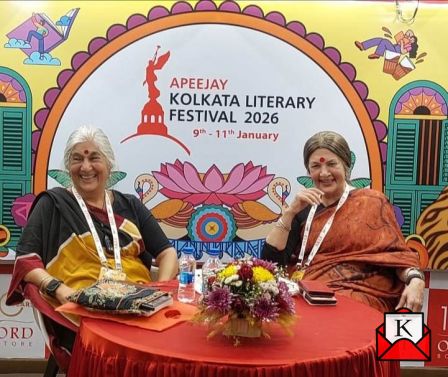
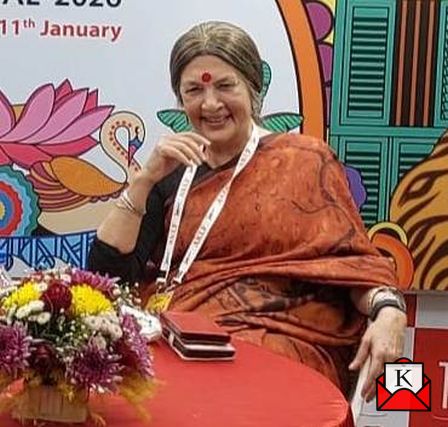
In the moving and thought-provoking “On Being Brinda” session at the Apeejay Kolkata Literary Festival 2026, Brinda Karat and Subhashini Ali discussed Karat’s memoir, “An Education for Rita: A Memoir, 1975–1985”. During a pivotal decade in India’s public life, the session provided an intimate examination of political development, personal recollection, and the everyday textures of existence.
The discussion reexamined the years 1975 to 1985 as a historical period influenced by women’s movements, ideological commitments, and the construction of the self via lived experience, drawing from the memoir’s chronology. The narrative chronicles Karat’s travel from Kolkata to Delhi, where she moved “straight into work” among textile workers in an entirely unfamiliar linguistic and cultural setting.
Speaking at the session, Brinda Karat showed how committed she was by calling this significant change in her life “the easiest thing.” She described a tense moment when she started collecting in large quantities on Kolkata’s streets using a red flag and a collection box. Her father was worried about the social prominence of her activities rather than her views, but the family was still supportive.
Karat explained what the memoir aimed to preserve: the intellectual prowess and personal potential of working-class people who are frequently disregarded by society. “Much of society’s talent is wasted due to structural inequality”, she said, movingly describing workers who, in addition to exhibiting charity, discipline, and patience, showed amazing ability despite lacking formal education, such as memorizing and citing laws in court battles. The feminist aspects of the memoir were also a major topic of discussion. Karat described the 1960s and 1970s as a time of worldwide inquiry and resistance, which in India gave rise to a robust feminist movement with both independent and left-leaning strands.
By considering the practice of meaningful engagement with communities, Subhashini Ali—a longtime political figure and activist herself—brought depth to the discussion. The joy, culture, and resiliency that defined these movements were considered by both speakers.
Writing as testimony and how memoirs can record not just events but also inner emotions like fear, resolve, hope, and endurance were the topics of discussion throughout the session. Instead of focusing solely on personal autobiography, it highlighted the memoir’s function in depicting a political age through lived experience. The story emphasizes the learning process within working-class struggles and women’s movements, demonstrating how political consciousness grows by shared struggle, solidarity, and continuous communication between social groups.
A broad conversation about political bravery, women in public life, history, and the memoir form was spurred by the regular audience questions. In response, both speakers emphasized that feminism is based on class struggle, lived experience, solidarity, collective joy, and resistance rather than being limited or elitist. They urged readers to view the memoir not simply as a historical account but also as a manual on how human connection and unwavering dedication to justice create transformational movements.
For more details, visit www.aklf.in
Priyanka Dutta