
Robot-aided Tele-Surgeries Now Performed In East India For 1st Time
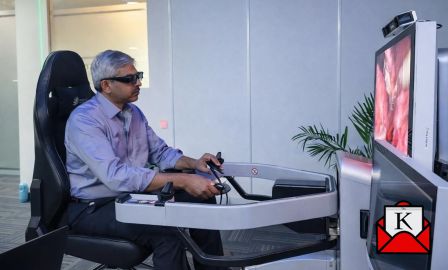
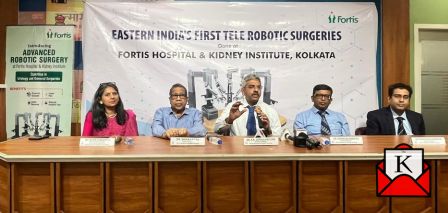
By completing the first robot-aided tele-surgeries in Eastern India, Fortis Hospital & Kidney Institute, Kolkata, has made significant progress in sophisticated robotic and remote surgical treatment. Operating surgeons were located almost 1,500 kilometers away, and the procedures were performed using the state-of-the-art SSI Mantra 3 robot-aided surgical system over a fast, dedicated 5G internet connection. Clinicians from New Delhi and Kolkata used telesurgery to perform robotic procedures in three different locations: Faridabad and Kolkata.
The procedures were led by Dr. R. K. Gopala Krishna, Director – Urology &Uro-Oncology, and Dr. Shrinivas Narayan, Director – Urology, Fortis Hospital & Kidney Institute, Kolkata.
The three intricate surgeries showed the clinical dependability of tele-surgical systems in India as well as the accuracy of robotic technology. This also demonstrated how the nation’s digital healthcare infrastructure is becoming stronger and creating new opportunities for providing skilled surgical treatment across geographic boundaries.
In the first instance, a middle-aged woman from Kolkata had a sizable adrenal tumor close to important organs and blood vessels. Remote robotic surgery was used to remove the tumor with remarkable accuracy.A young woman with pelviureteric junction (PUJ) obstruction, a congenital blockage affecting renal drainage, had the second operation. Despite the long-distance setup, the team performed pyeloplasty, an advanced reconstructive technique that required precise suturing.
In both instances, the physicians were located in Delhi, and the patients were in Kolkata. The patients already had underlying medical issues, and when their symptoms got worse, it was not medically recommended for them to travel great distances to Delhi for treatment, which could have made things worse.
In the third instance, a 70-year-old Faridabad man was unable to travel due to a 9 cm malignant kidney tumor. He had a Tele-Robotic Partial Nephrectomy after being evaluated virtually. The remaining kidney was preserved when the tumor was removed. The surgical team removed the tumor and rebuilt it in 22 minutes, adhering to a rigorous 30-minute clamp window to avoid irreversible harm. The patient is recuperating well, didn’t need a blood transfusion, was extubated without incident, and will be released in two to three days. For a tumor this large, this is one of the first extremely complicated tele-robotic partial nephrectomies in India.
Each of the three procedures was successfully finished, and the recuperation period following the procedure went smoothly. Reduced discomfort, less blood loss, quicker recovery, and shorter hospital stays were among the advantages of minimally invasive robotic surgery for the patients. This accomplishment is the first successful tele-surgical surgery of this magnitude in Eastern India and signifies a revolutionary step in the delivery of contemporary healthcare.
Priyanka Dutta