
An Excellent Session On The Infrastructure Growth In Bengal
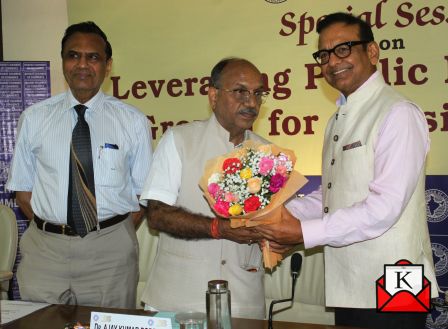
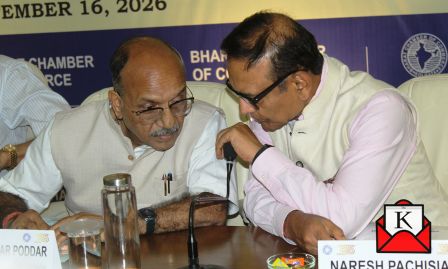
A special session on ‘Leveraging Public Infrastructure Growth for a Resilient Bengal’ was organized at the Bharat Chamber of Commerce.
Dr. Ajay Kumar Poddar, Hon’ble Minister-in-Charge, Departments of Public Works and Public Health Engineering, Government of West Bengal, graced the event.
In the last ten years, India’s consistent investment in infrastructure including roads, railways, ports, airports, energy, and digital connectivity has eased logistical bottlenecks, boosted domestic demand, and reinforced the economy’s productive base. India has been able to sustain growth and draw in investment thanks to its growing public infrastructure, even as global trade, energy supplies, and capital flows have been disrupted by geopolitical tensions. It has therefore become a key source of India’s economic resilience in a world that is growing more uncertain and fragmented.
At that time, for multiple reasons, West Bengal’s infrastructure remained disconnected from the national plans and programs. When travelers by road go beyond the State, disparities in road conditions become evident. We are pleased to see that a noticeable change has already taken place. The Public Works Department is shifting from standalone road repairs to building a more cohesive network of highways, bridges, bypasses, and urban outer roads. This marks a positive shift in both the scope and focus of road-infrastructure planning in West Bengal, with potential indirect advantages for the state’s economic growth.
It has been reported that the State Government has decided to hand over the maintenance of key National Highway sections to NHAI and the National Highways and Infrastructure Development Corporation, in order to enable faster and more specialized handling of these matters. This is likewise a helpful move.
Maintenance deserves equal priority to new construction. Every major road and bridge could be equipped with a lifecycle-maintenance plan, including a dedicated annual budget and clearly assigned responsibilities. Contracts tied to performance, where contractors are responsible for maintaining road quality over multiple years, would be better than relying on frequent, short-term fixes. Quality-control laboratories need to be enhanced, third-party technical audits should be implemented for significant projects, and contractor performance must be logged in a transparent statewide database. Payments should be tied to independently verified quality and durability, not just to the completion of specified quantities.
The Railways are upgrading railway stations and the surrounding areas. A similar approach is needed for our ferry services and ghats. Thanks to its vast river network, West Bengal holds significant potential to expand ferry services as a cost-effective, efficient, and eco-friendly alternative to road and rail transport. Upgrading ferry ghats with safe docks, year-round access, lighting, passenger facilities, digital ticketing, and reliable boats would enhance daily travel and ease congestion on busy roads and bridges.
User-friendly, efficient, and reliable civic infrastructure serves as the visible representation of a State, influencing its capacity to draw investment and tourism and supporting sustainable economic growth both directly and indirectly. The current initiatives being implemented generate significant optimism that, within the next five years, West Bengal will experience a remarkable overhaul of its infrastructure and development environment.
Priyanka Dutta