
Colour My Grave Purple- A Great Ode To The Spirit Of Assam
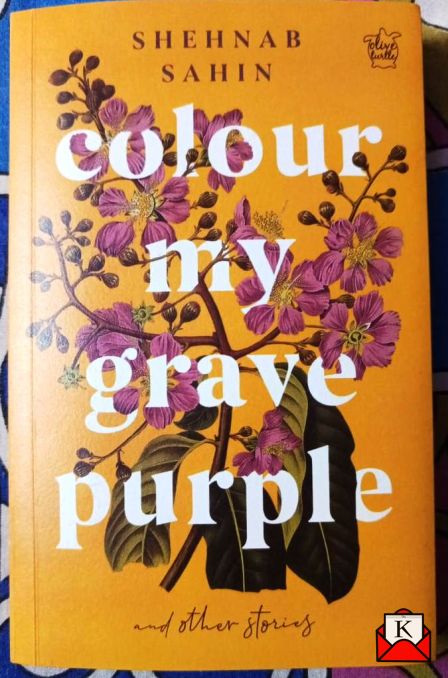

Shehnab Sahin’s anthology, Colour My Grave Purple and Other Stories, is a remarkable literary endeavor that captures the meandering history of Assam. Spanning a century from the 1850s to the 2010s, the collection weaves together the historical, supernatural, and personal aspects of the region’s collective consciousness. It serves as an evocative love letter to the Northeast, bringing frontier voices to Indian historical fiction.
The anthology is composed of ten short stories, each acting as a window into a specific era. Sahin begins with Two Leaves and a Bud (1858), set against the tumultuous backdrop of the colonial plantation economy, and moves through key historical moments, culminating in Love is a Flimsy Kite (2019). Along this journey, readers encounter a fascinating medley of characters: occult practitioners, British colonial agents, the Chinese Red Army, and a British-Naga queen, Ms. Ursula Graham Bower, whose real-life alliance with the Zemi Nagas adds rich historical complexity to the narrative.
What distinguishes this collection is Sahin’s effort to shift the literary lens away from the shadow of regional insurgency. While acknowledging the sociopolitical realities, the author chooses to highlight the vibrant, syncretic identity of the Assamese people. The stories explore a variety of themes, from the colonial exploitation of local laborers to the poignant navigation of queer identity in the 1970s. The Brahmaputra River acts as an overarching metaphor for these tales—winding, resilient, and life-giving.
Furthermore, the book has a deeply personal heartbeat. In the Author’s Note, Sahin reveals that the collection is dedicated to her late father, Khobir Ahmed, a police officer and author whose own dual life inspired her to bridge the gap between authority and art. The title itself, while initially appearing macabre to some, stems from her grief over his passing and reflects the themes that have defined her journey into fiction.
Sahin’s background as a student of history is evident in her meticulous attention to cultural and environmental details. Her vivid descriptions of human-animal conflicts—such as elephants navigating through traffic—ground the fiction in authentic lived experiences. The natural and the supernatural flow seamlessly into one another, creating a rich, undulating canvas that leaves a lasting impression.
Ultimately, Colour My Grave Purple is more than just an anthology of short stories; it is an ode to the landscape and spirit of Assam. Through its masterful blend of history and human resilience, Sahin’s work ensures that the diverse, everyday experiences of the Northeast are celebrated in all their complexity. It is essential for anyone seeking to understand the region.
Priyanka Dutta