
West Asia Conflict & Its Great Impact On India’s Foundry Sector
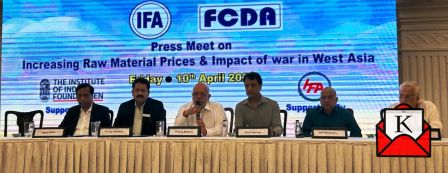

According to a joint statement released by prominent industry bodies, the escalating Iran-US conflict had severely disrupted India’s foundry and castings sector, leading to sharp increases in raw material costs and logistics expenses.
A press meet was organized recently and was attended by Sandip Kejriwal, Sumit Agarwal, Anil Madhogaria, and Sandip Dutta.
Pig iron prices have sharply increased by more than 13% over the last three months, according to reports from the Indian Foundry Association (IFA), the Institute of Indian Foundrymen (IIF), and the Foundry and Castings Development Association (FCDA). As of April 10, the price of steel-grade pig iron had risen from Rs 36,500 per tonne in January 2026 to Rs 41,500 per tonne, while foundry-grade pig iron had risen from Rs 40,000 to Rs 45,000 per tonne.
Rising input costs exacerbated the surge. Due to increased freight and war-related surcharges, domestic hard coke prices rose by Rs 2,000–3,000 per tonne. Since January, catalyst prices have increased from Rs 50 to Rs 75 per kg, while resin prices have sharply increased from Rs 100 to over Rs 160 per kg.
With freight rates to important markets like the US, Europe, and the Middle East rising by 50–60%, logistics costs became a significant concern. Due to increased insurance premiums of up to 5–10% of vessel value, war risk surcharges, and the rerouting of shipments via the Cape of Good Hope during Red Sea tensions, overall logistics costs rose by 40–100%.
There were indications of a slowdown in export demand as buyers around the world became more cautious. Automotive and construction-related castings saw a slight slowdown, but the oil and gas, pump, and valve segments stayed steady. Working capital cycles were stretched, shipments were delayed, and margin erosion was among the growing problems MSME foundries had to deal with.
According to the Joint Chairman of FCDA, Vijay Shankar Beriwal, payment cycles have gotten much longer, which puts more strain on MSME foundries that are already dealing with declining margins and increasing working capital stress due to rising input costs. He added that in spite of these difficulties, India’s robust domestic production ecosystem and varied sourcing capabilities continued to offer some resilience, protecting the pig iron market from supply shocks and worldwide uncertainties.
Despite the challenges, industry bodies noted that India was increasingly being viewed as a reliable alternative sourcing hub, supported by its strong engineering capabilities, cost competitiveness, and established global trade relationships.
Priyanka Dutta