
Robotic Surgery Very Helpful In Treating A High-Risk Case
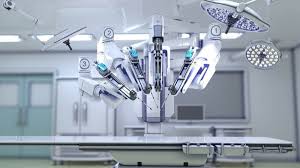
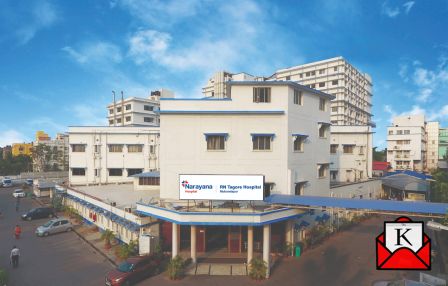
Despite the case being deemed too high-risk by several other hospitals, doctors at Narayana RN Tagore Hospital, Mukundapur, successfully performed robotic surgery on a 68-year-old woman with advanced ovarian cancer, severe chronic liver disease, and portal hypertension in a noteworthy medical achievement. The patient recovered well after the intricate procedure, which removed all visible cancer, and was released in just four days.
Dr. Upasana Palo, Consultant-Gynaecologic Oncology and Robotic Surgery, and her team took up the case after realizing that the problem was not only the cancer but also the liver failure and high blood pressure in the portal vein. When performing surgery on a patient with portal hypertension, it was necessary to avoid veins that could burst at the slightest pressure. The abdomen’s normal anatomy had been distorted by the enormously enlarged spleen, making navigation even more challenging. Low platelet counts and poor clotting meant that even minor blood loss carried a high risk. All of this had to be taken into consideration at the same time in any surgical strategy that Dr. Palo and her team developed.
In order to evaluate her case and improve her condition, the team first assembled experts from the fields of cancer treatment, liver disease, anesthesia, and hematology. To minimize damage to surrounding tissue, the procedure—which included removing the uterus, ovaries, lymph nodes, abdominal lining tissue, and any visible cancer deposits—was carried out using robotic instruments and tiny keyhole incisions. The enlarged spleen, which had been a major worry all along, was unharmed. There was very little blood loss and no surgical complications.
Dr. Palo said, “The patient’s accompanying medical co-morbidity, rather than just the cancer, was what made this case difficult. We were able to operate safely within those limitations thanks to robotic surgery, and the team’s combined experience made sure that every risk was considered before we started”.
She didn’t require critical care. On the fourth day following surgery, she was released because her liver function remained stable. Chemotherapy alone would not have been able to eradicate the disease, but the histopathology of the removed tissue revealed the presence of live cancer cells.
This case shows that, even in cases where the odds seem to be against it, a meticulous, well-planned surgical approach can occasionally provide what medication cannot: the physical removal of disease.
Priyanka Dutta