
The Caged- A Special Challenge Of The Status Quo
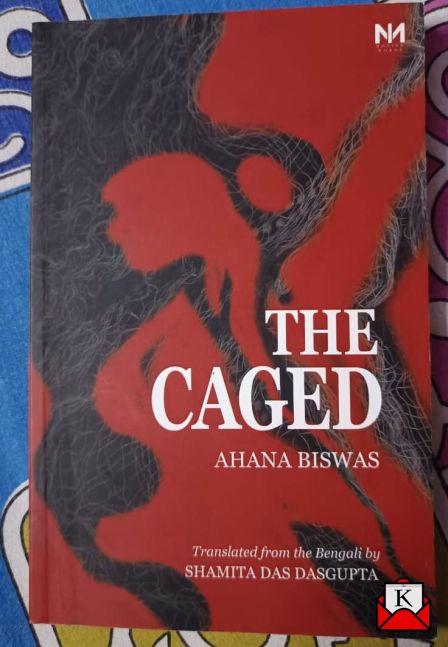
The Caged, authored by Ahana Biswas, is a powerful and unsettling exploration of the human condition, specifically focusing on the intersection of femininity, power, and patriarchal constraints. Originally written as the Bengali novella Karabas, this work has been skillfully translated to reach a broader audience, retaining its intense narrative depth.
The novella centers on its complex protagonist, Pari, whose name translates to fairy or angel. While Pari possesses exquisite physical beauty, this trait does not serve to liberate her; instead, it invites a masculinist gaze that seeks to fetishize and objectify her. Rather than surrendering to this patriarchal expectation, Pari weaponizes her beauty to meet her own needs, becoming a character who defies simple categorization—she is at once heroine and villain, victim and criminal.
The narrative serves as a scathing critique of a society that idealizes women in the abstract—often through goddess-worship—while simultaneously subjecting them to systemic violence and the deprivation of basic human rights. Through Pari’s struggle, Biswas interrogates how a woman can achieve her ambitions when confined by rigid, socially dictated gender roles. The translation title, The Caged, was chosen specifically to represent the overwhelming strength of patriarchal subjugation and the tragic futility often faced by individuals attempting to escape such pervasive oppression.
Comparisons are drawn in the foreword to the Greek mythological figure Medea, suggesting that Pari, like Medea, is a woman who refuses to accept injustice silently and instead takes radical, often destructive, control of her own life. Ultimately, The Caged is a poignant reminder that while a lone woman may secure some ground, the struggle against a deeply entrenched, male-dominated world is fraught with psychological and physical peril.
Ahana Biswas has crafted a narrative that is both a study of crime as a form of destruction and an unflinching look at the quest for female agency. It is an essential read for those looking for literature that challenges the status quo, demanding that women be viewed as independent individuals with their own unique motives, desires, and emotions, rather than merely in relation to the men in their lives.
Priyanka Dutta