
The Best Chance Of Cure For Breast Cancer- Early Detection

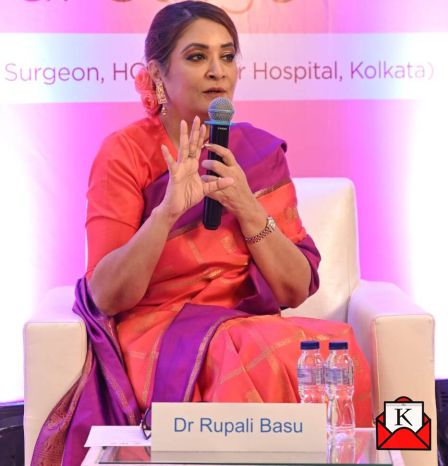
At an awareness session, doctors stated that timely detection, genetic risk assessment, and individualized treatment can greatly improve outcomes and are now the driving forces behind breast cancer care rather than just fear.
Dr. Jyoti Gupta, a consultant in breast surgery at the HCG Cancer Hospital in Kolkata, urged discussions about breast cancer to shift from fear to action. “Today, breast cancer treatment is very customized. Modern treatment allows us to combine cancer control with preservation of form, function, and quality of life, while early detection gives us the best chance of cure,” said Dr. Gupta.
She engaged in a free-flowing conversation with Debjani Guha, the runner-up for Woman of the Universe 2025 and Mrs. India Queen of Substance.
The patient journey has been significantly altered by contemporary breast cancer treatment. Patients may now receive breast-conserving surgery, oncoplastic reconstruction, radiation, chemotherapy, hormonal therapy, HER2-targeted therapy, immunotherapy, or more recent targeted medications, depending on the biology and stage of the tumor. Treatment choices are increasingly influenced by the type of tumor as well as its location.
For women with a strong family history, early-onset breast cancer, bilateral breast cancer, ovarian cancer in the family, or specific high-risk tumor patterns, genetic risk assessment is also becoming a crucial component of care. Women and families who may require closer monitoring, preventative measures, or treatment choices based on inherited risk can be identified with the use of tests for mutations like BRCA1 and BRCA2.

The message needs to go beyond clinics, according to Dr. Gupta, who recently walked the red carpet as a guest at the Cannes Film Festival: awareness saves lives, early detection matters, and no woman should suffer in silence.
When detected early, localized breast cancer has a survival rate of over 99%, according to international data. According to Dr. Rupali Basu, Regional Business Head, East & AP, HCG Cancer Hospitals, awareness, screening, and prompt treatment must therefore become a shared public health priority.
Warning signs to watch for
* A painless lump in the breast or armpit
* Change in breast size or shape
* Nipple discharge
* Nipple retraction
* Skin dimpling, redness, or thickening
* Persistent breast pain
* A wound or sore that does not heal
Every suspicious change should be examined by a doctor, even though not all changes are cancer.
Priyanka Dutta